
Contents
- What is a solar water feature?
- How do solar water features for gardens work?
- Are solar water features worth it in the UK climate?
- The 7 main types of solar water feature
- How to choose the right solar water feature
- Installation guide: setting up your solar water feature
- Maintaining a solar water feature
- Our solar water feature range at Water Garden
- Frequently asked questions
- Further reading
- Resources
You want the sound of moving water in your garden without running a mains cable across the lawn, trenching under a path, or paying an electrician for a fused outdoor spur. You also want to know whether a solar water feature will actually run in British weather.
This guide walks through how solar water features for gardens work, whether they are worth it in the UK climate, the seven main types, how to size and choose one, and how to install and maintain it. Toward the end you will find a walk-through of our current solar water feature range, an FAQ section, and further reading. Everything here is drawn from two decades of hands-on experience at our Portsmouth showroom.
What is a solar water feature?
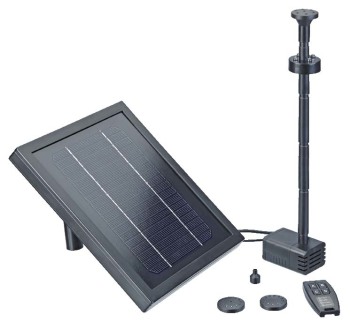
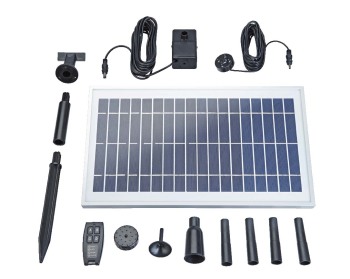
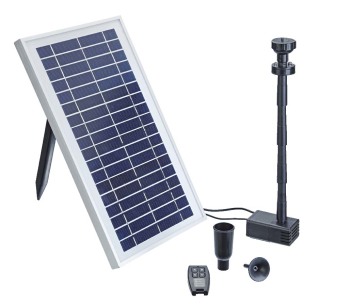
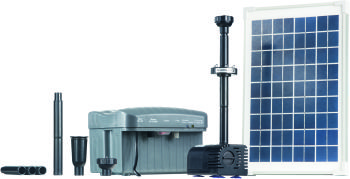
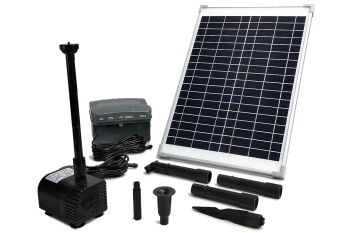
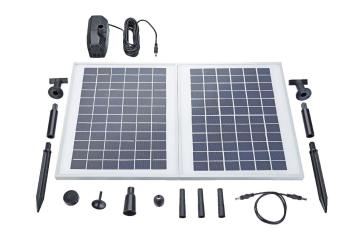
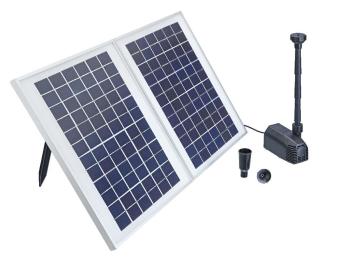
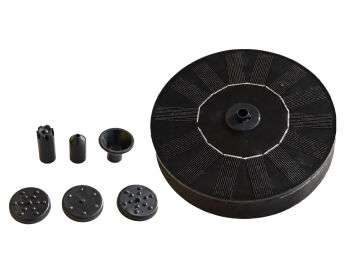
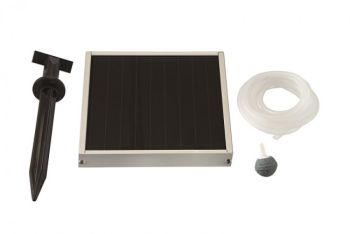
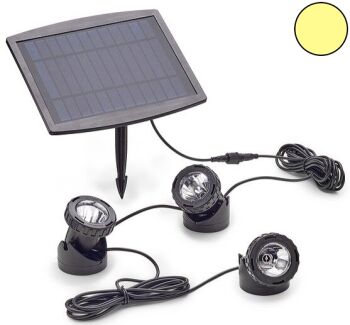
A solar water feature is a self-contained ornamental feature powered by a photovoltaic panel rather than a mains electrical supply. The panel converts daylight into low-voltage direct current that drives a small submersible pump, which circulates water through a cascade, fountain head, spitter, sphere or reservoir. Some models run only while the panel is producing power; others include a rechargeable battery so the feature continues after sunset or on overcast days. You can browse our full solar water feature range to see the full spread of formats.
How do solar water features for gardens work?
Every solar water feature shares the same basic chain: panel, cable, pump, water. What differs between models is what happens between the panel and the pump, and this is where the three main technology types diverge. The choice you make here has a bigger effect on day-to-day performance than the style of the feature itself.
Direct-solar
In a direct-solar feature, the panel feeds the pump in real time. Strong sun means full flow; a passing cloud drops the flow; at dusk the pump stops. These kits are the simplest and cheapest to buy, with the fewest components to fail, but they are entirely at the mercy of the weather.
Battery-backed solar
A battery-backed model adds a lithium-ion or sealed lead-acid battery between panel and pump. Surplus energy during bright periods is stored and released gradually, so the pump runs at a steady rate regardless of short cloud cover, and continues for a set number of hours into the evening. Most modern battery kits also allow a manual "on" mode for running the feature at a specific time, such as when you are entertaining.
Hybrid solar plus mains top-up
A hybrid feature pairs a solar panel with an optional low-voltage mains adaptor. In peak summer the feature runs entirely on solar; in winter or during a run of grey days, you plug in the adaptor to keep it ticking over. Hybrids cost more up front but give you the greenest possible year-round operation with a reliability floor. We often specify a solar pump compatible with multi-purpose features when a customer wants to upgrade an existing mains feature onto a hybrid footing.
Are solar water features worth it in the UK climate?
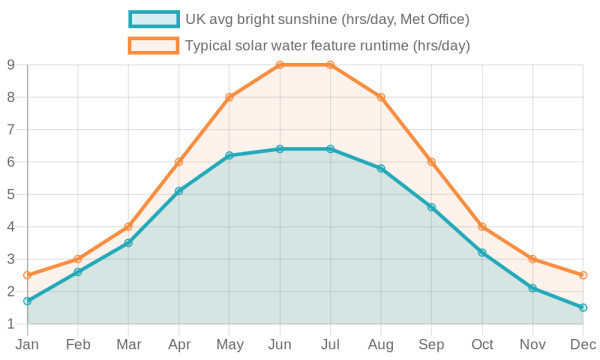
It is the question we hear most often in the showroom, and the honest answer is yes, with one proviso about the type you choose. According to Met Office long-term averages, the UK receives around 1,400 hours of bright sunshine per year, with the south coast reaching closer to 1,750 hours. That sounds modest compared with the Mediterranean, but modern monocrystalline panels are far more effective in diffused light than the older polycrystalline units most buyers remember. A panel rated at 10W will still generate a useful 3–5W output under thin cloud, enough to keep a small birdbath pump running at roughly two-thirds its rated flow.
A correctly sized direct-solar feature in a south-facing or west-facing spot will run for 6–10 hours on a typical day between May and August, and 2–4 hours on a clear winter day. For gardens with tree shade, a north aspect, or a boundary wall that cuts the afternoon sun, a battery-backed or hybrid kit is the better specification. We generally recommend the battery route for anyone who wants the feature running in the evening while they are actually in the garden.
Bottom line: a well-sized solar water feature typically runs 6–10 hours a day on a UK summer day, and a battery-backed kit extends that comfortably into the evening.
A quick myth-vs-reality note. The myth is that solar features are a summer-only novelty that sit dormant for half the year. The reality is that a battery-backed or hybrid kit with a clear line of sight to the southern sky will produce moving water on most days of the year, including bright winter mornings. What stops them is not temperature, it is shading.
The 7 main types of solar water feature
Solar features fall into seven broad archetypes, each suited to a different kind of garden. Picking the right category before you pick a specific product saves you the frustration of buying a beautiful feature that turns out to be too small for a 30-metre lawn, or too large for a courtyard.
Solar cascade and tiered fountains
Cascades use a multi-level reservoir design where water tumbles from an upper bowl down through one or two intermediate levels before collecting in the base. They produce more audible movement per litre of water than any other type, which makes them the standard recommendation for masking road or neighbour noise. A cascade typically needs a pump in the 200–400 L/h range and a reservoir wide enough to catch splash on windy days.
Solar bird bath fountains
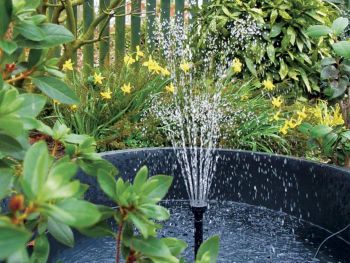
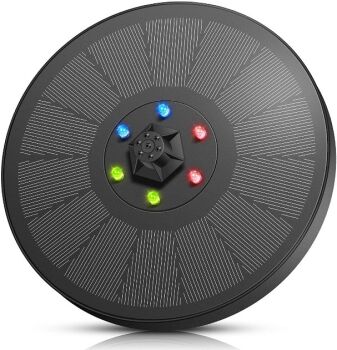
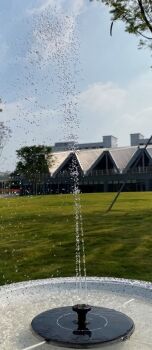
A Solar Bird Bath Fountain is the smallest and most approachable type, usually a floating panel-and-pump unit dropped into an existing bird bath or shallow bowl. They are an easy entry point at the lower end of the price range, and a favourite with customers who want to attract more garden birds without committing to a full installation. They run happily on direct-solar power in any bright spot.
Solar pond fountains
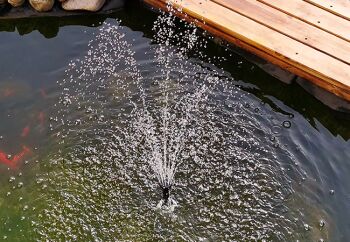
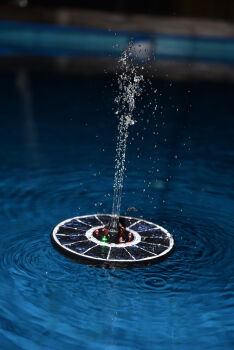
Solar pond fountains sit on the surface of an existing pond and throw a spray pattern above the water line, oxygenating the pond and adding visual interest. They differ from our heavier mains floating pond fountains, which are designed for larger lakes and higher spray heights. For a garden pond of 1,000–5,000 litres, a solar pond fountain with a modest 180–750 L/h pump is usually the right specification.
Solar sphere and ball fountains
The Solar Sphere Fountain has become one of the most popular contemporary designs, thanks to the clean geometry and the way water sheets evenly down the curved surface. Stainless steel, granite and ceramic are the common materials. If the sculptural look appeals, our wider sphere water features collection shows the same silhouette in mains-powered specifications for larger displays.
Solar spitter fountains and statues
Spitters are ornamental figures, typically animals, frogs or classical busts, that spit a single jet of water into a bowl or pond. They are a compact option for a small courtyard or a raised pond edge, and because the flow requirement is low, they run well on direct-solar power even in less sunny aspects. Expect a pump in the 250–600 L/h range.
Solar wall and patio fountains
Wall-mounted and free-standing patio fountains are designed to occupy a vertical plane against a boundary wall, fence or outbuilding. They work particularly well in a narrow side return or on a patio where floor space is at a premium. The panel is usually supplied on a separate cable, so you can mount it above the fence line in full sun while the feature itself sits in shade below.
Extra-large solar water features
Larger installations, usually 1.2m in height and upward, require a higher-wattage panel (20W or more) and, in most cases, a battery-backed controller to maintain a convincing flow rate. Our extra-large garden water features section covers the scale above domestic patio pieces, and several designs are available in solar-compatible specifications for buyers who want a statement feature without the cabling work of a mains installation.
How to choose the right solar water feature
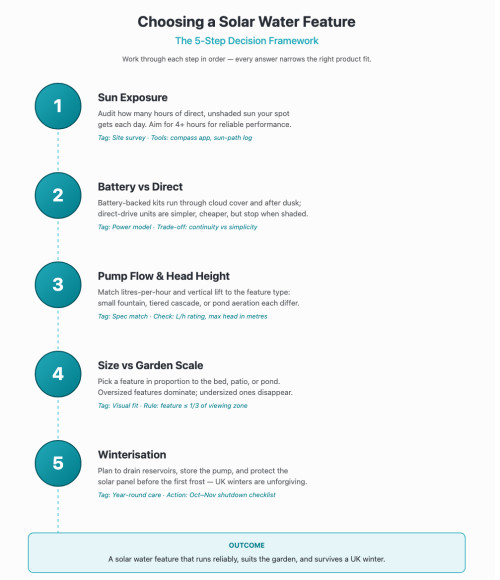
There is a logical order to sizing and selecting a solar feature. Working through it takes about ten minutes and saves a lot of disappointment. Use the five questions below as a checklist before you add anything to a basket.
Sun exposure. Walk your intended site at 10am, 1pm and 4pm on a bright day and note hours of direct sun. Four or more hours of direct summer sun suits direct-solar. Two to four hours, or heavy dappled shade, points you to battery-backed. Less than two hours means a hybrid kit, or rethinking the location.
Battery or direct-solar? If you only use the garden at weekends in high summer, direct-solar is fine. If you want the feature running at 7pm on a Wednesday in June while you eat outside, you need a battery. There is no acoustic difference between the two, only in when the operation happens.
Pump flow rate and head height. The pump must lift water to the highest point of the feature (head height) at a useful flow rate (litres per hour). Every pump loses flow as head height increases, so the rated flow at 0m is never the flow you see at the spout. Use the table below as a starting point.
Feature size vs. garden scale. A 60cm sphere looks striking in a 4m courtyard and disappears on a 30m lawn. As a rough rule, the feature's tallest dimension should be at least 10% of the viewing distance from the nearest seating area. A feature viewed from 6m away wants to be at least 60cm tall.
Winterisation. Decide now whether you plan to run the feature through winter or drain and store it in November. Fibreglass resin and stainless steel tolerate year-round outdoor placement; unsealed sandstone and terracotta need to come indoors once frosts begin. This single decision narrows your shortlist considerably.
Installation guide: setting up your solar water feature
A straightforward installation takes one person around 45 minutes from unboxing to first running water, assuming the reservoir site is prepared. The five steps below apply to almost every kit on the market.
Site the panel. Mount the panel where it receives the most direct sunshine across the day, ideally facing south and tilted at roughly 30–40 degrees from vertical. Keep it clear of overhanging branches, washing lines and fence caps. Run the cable along a neat route, clipping it to fence posts or edging rather than laying it loose where a mower can catch it.
Level the reservoir. Position the reservoir, pedestal or basin on a firm, flat base. Any slope more than 2 degrees will cause water to pool at one edge and the pump to run dry on the other. Use a spirit level across two axes and pack shims underneath until the base reads level. A level feature is a quiet feature.
Prime the pump. Fill the reservoir with clean water until the pump is fully submerged, with at least 30mm above the top of the pump housing. A pump that is not fully submerged will air-lock, whine loudly, and fail within days. Never run a solar pump dry.
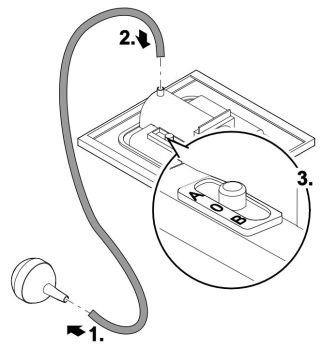
Run a first test. With the panel in direct sun, connect the cable and allow 60 seconds for the pump to prime. Check the flow looks right: a cascade should sheet evenly across each tier, not stream down one side. Adjust the pump's flow regulator (most models have a small dial on the housing) and reposition the feature until the display looks balanced.
Ongoing upkeep. Walk around the running feature and check for leaks at the reservoir joint, kinks in the cable, or sharp rocks pressing against the pump housing. A well-commissioned solar feature should need very little intervention for its first full season.
For more detail on aftercare across your whole garden water set-up, our pond building and maintenance advice hub covers seasonal tasks, algae control and pump servicing in depth.
Maintaining a solar water feature
Solar features are among the lowest-maintenance products in the water garden category, but "low" is not "none". A handful of simple routines, repeated on a predictable schedule, will extend the working life of both panel and pump well past their warranty periods.
Keeping the panel clean.
Dust, pollen and pigeon droppings all cut panel output significantly. A panel with a 20% coating of grime can lose as much as 30% of its power output, which translates directly into a weaker, shorter-running feature. Wipe the panel down with a soft microfibre cloth and clean water every four to six weeks during the active season. Never use solvents or abrasive sponges on the panel face.
Cleaning algae from the reservoir.
Algae will always appear in a reservoir that sees direct sunlight and warming water. Skim any visible bloom with a fine net weekly in summer, and fully drain and refill the reservoir every six to eight weeks during the warm months. A quick reference guide on how to clean a water feature is available in the maintenance hub. Avoid chlorine-based cleaners, which damage pump seals; a mild vinegar solution is sufficient.
Protecting the pump over winter.
If you are not running the feature through winter, remove the pump, rinse the impeller chamber in warm water, and store it in a bucket of clean water in a frost-free shed or garage. Storing a pump dry allows the seals to dry out and crack. Drain the reservoir completely, or cover it, so that expanding ice cannot split the housing.
Replacing a failed solar pump.
Solar pumps are service parts, not lifetime parts. A well-maintained pump typically lasts three to five seasons before the bearings wear and flow drops noticeably. Replacements are inexpensive and usually available as a generic low-voltage part that matches the original voltage and flow rating. Keep a spare on the shelf for the height of summer, when a sudden failure is most disappointing.
Our solar water feature range at Water Garden
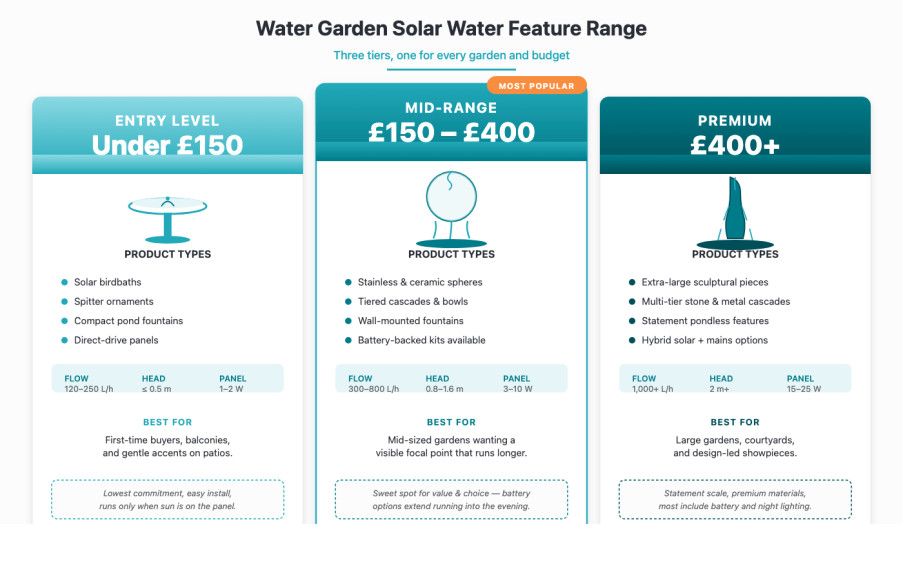
Our solar powered water features range is organised into three broad price bands. The right band for you depends less on budget and more on the scale of the feature you need and how you want it to perform year-round.
At the entry level, below £150, you will find direct-solar birdbath fountains, compact spitters and small ornamental bowls. These are ideal for a small patio, a balcony, or as a first solar feature for a customer who wants to test how solar behaves in their garden before committing to something larger. Runtime is dictated entirely by the day's sun, and pumps are in the 100–250 L/h range.
The mid-range, £150–£400, is where battery-backed kits begin and where the bulk of customer purchases sit. This band includes solar sphere and ball fountains in stainless steel water features and ceramic finishes, tiered cascades for a medium-sized patio, and taller wall fountains. Most kits in this tier include a battery controller with a remote that lets you run the feature for a set number of hours regardless of cloud cover. It is worth keeping an eye on our solar water feature clearance for seasonal savings on end-of-line and ex-display items.
The premium band, £400 and above, is where you will find extra-large installations, sculptural pieces in corten steel water features and solid sandstone water features, and hybrid-ready kits with high-wattage panels and year-round controllers. A feature at this level is a landscape statement rather than a patio accessory. For buyers choosing between solar and mains at this scale, both are valid: mains gives you absolute reliability and the highest flow rates, while solar gives you placement freedom and zero running cost.
Frequently asked questions
How do solar water features work?
A photovoltaic panel converts daylight into low-voltage direct current, which powers a small submersible pump in the reservoir. The pump circulates water through the feature's cascade, spout or fountain head and back into the reservoir in a closed loop. Direct-solar models run only when the panel is producing power, while battery-backed models store surplus energy to extend operation into cloudy periods and evenings.
Are solar powered water features any good?
A correctly specified solar powered fountain performs very well in UK conditions. Modern monocrystalline panels generate useful power even in diffused light, and battery-backed controllers smooth out the variation caused by passing cloud. The feature to match to your garden depends on aspect, sun hours and whether you want evening operation, which is why sizing before purchase matters far more than brand choice.
What is the best solar water feature?
There is no single best solar water feature, only the best one for your garden. A south-facing patio with four-plus hours of direct sun suits a direct-solar cascade or sphere. A north-facing courtyard or shaded corner suits a battery-backed or hybrid kit. If you are unsure, call us with a photograph of the intended site and we will specify the right pump and panel combination.
Do solar water features work in winter?
Yes, a solar feature will run on any bright winter day, typically for 2–4 hours around midday. Battery-backed kits extend that further. What stops a solar feature in winter is not cold weather but ice: if the reservoir freezes, the pump cannot draw water. We generally recommend draining and storing smaller features from late November to early March in frost-prone areas.
Can I leave a solar water feature out all year?
That depends on the material and your garden's climate. Fibreglass resin and stainless steel tolerate year-round outdoor placement in most of the UK, provided the reservoir is drained before the first hard frost. Unsealed sandstone, terracotta and natural ceramic should come indoors for winter. The pump itself should always be removed and stored in a bucket of water in a frost-free space.
How long does the battery last on a solar water feature?
On a fully charged battery, most modern solar water feature kits run the pump for 6–10 hours continuously. The battery recharges throughout the day as the panel produces surplus power, so on a bright summer day the pump can run almost indefinitely. Battery lifespan is typically 3–5 seasons before capacity drops noticeably and replacement is worthwhile.
Further reading
- Solar powered water features range covering every solar format we currently stock
- Full water features collection if you are comparing solar against mains-powered options
- Solar pumps for upgrading or replacing a pump on an existing solar feature
- Water feature designs organised by style, silhouette and garden setting
- Pond and water feature maintenance guides for seasonal care, algae control and pump servicing
Resources
- Met Office, UK climate averages: long-term annual bright sunshine hours across the United Kingdom (approximately 1,400 hours national average; higher on the south coast).
- Water Garden showroom and technical team observations, Portsmouth, drawn from over two decades of pond and water feature installation and servicing.
Choosing between solar water features for gardens comes down to matching aspect, scale and material to how you actually use your garden across the year. If you would like a second opinion on a shortlist, a recommendation based on your site's sun exposure, or advice on pairing a solar feature with an existing pond, call the team in Portsmouth on 02392 373735 or drop us an email for personalised guidance.
Written by the Water Garden team. Based in Portsmouth, Hampshire, Water Garden has over two decades of hands-on experience in pond, lake and water feature installation, and is the UK's No.1 independent retailer of OASE equipment.