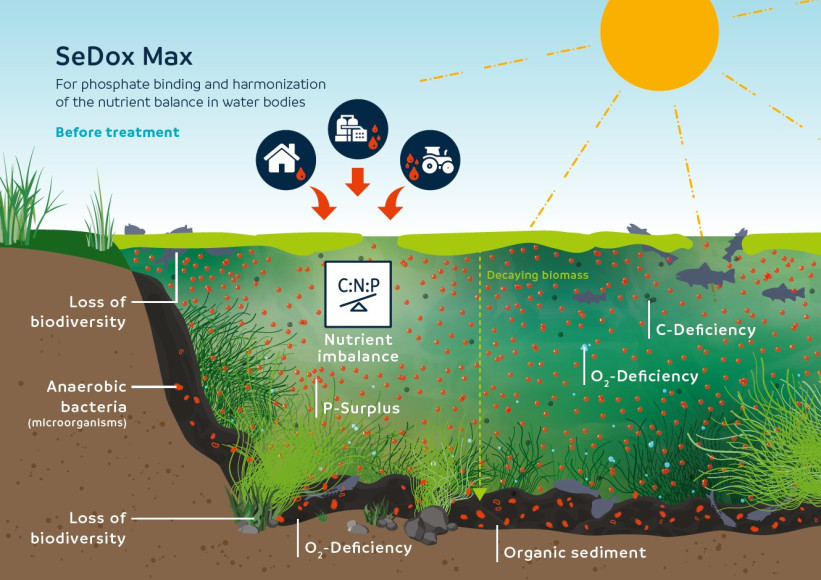





External nutrient inputs from agriculture, wastewater treatment plants and industry are the main sources of nutrient over-enrichment – particularly phosphorus (P) and nitrogen (N) – in aquatic ecosystems. This nutrient surplus disrupts the natural ecological balance and can promote excessive growth of unicellular algae (phytoplankton), especially cyanobacteria, which predominantly inhabit the photic zone of the water column.
When phytoplankton die and sink to the bottom of a water body, the microbial decomposition of the organic material consumes oxygen (O2), which can potentially lead to hypoxic or anoxic conditions. This poses a threat to heterotrophic aquatic organisms such as fish and can ultimately result in a loss of biodiversity.
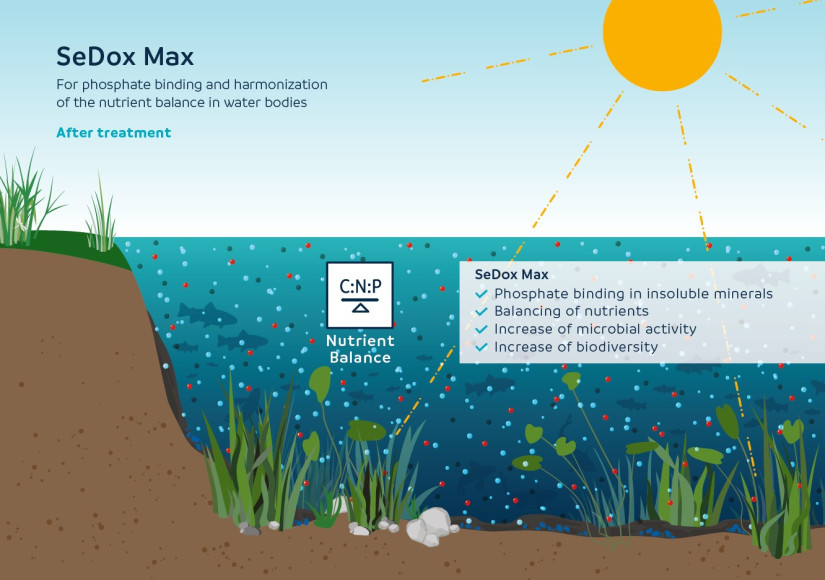
Maintaining a well-regulated nutrient balance is essential for sustaining biological diversity in aquatic ecosystems. When P, N, and carbon (C) are present in appropriate proportions – known as the Redfield ratio – the waterbody is in nutrient equilibrium, which supports a healthy aquatic community and prevents the excessive proliferation of specific organisms. However, when nutrient concentrations become unbalanced, this typically results in the rapid growth of specific, highly adapted algal species.