
What is the best method to aerate a lake?
Circulating and oxygenating a large, otherwise stagnant body of water offers significant long-term benefits to the water quality and the inhabitants that reside within the lake. Large ponds and lakes come in a vast spectrum of shapes and sizes and also range significantly in depth, so choosing the best method of aeration requires careful thought.
Water Garden Ltd have listed some of these important considerations below, to help guide you towards the right aeration system for your lake.
Power Availability.
This is an important point and may dictate the type of aeration system and, in fact, whether one can be used at all. Ideally, an electrical power source would be sited near the shoreline. In the case of larger lakes, several power points may be required around the perimeter to reduce excessive lengths of submerged cables from the power source to the aerator. Larger lakes may also require 3 Phase power due to the aerator(s) required to effectively address the size of water body.
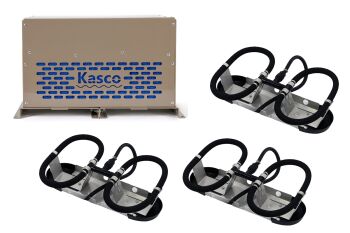
If electrical power cannot be sited close to the lake, it may be possible to use a sub-surface aeration system as the compressor can potentially be mounted several hundred metres away from the shoreline and the compressed air can be carried through a single air hose to the shore and into the lake.
Whilst solar power may seem like a practical consideration, lake aeration equipment tends to be beyond the capacity for a simpler ‘off-grid’ solar system, or the solar rig would be too expensive to consider Vs laying a power cable in place. Mains electrics is therefore the best option.
Lake depth.
Shallow bodies of water (0.6m to 1.5m) can still be aerated and circulated effectively, but the methods and equipment choices are more limited. Floating Aerators or Injector Aerators are an excellent way to increase water movement and many systems can operate in water depths as shallow as 45cm.
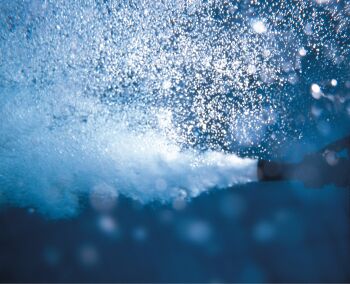
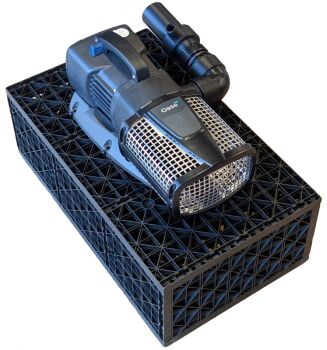
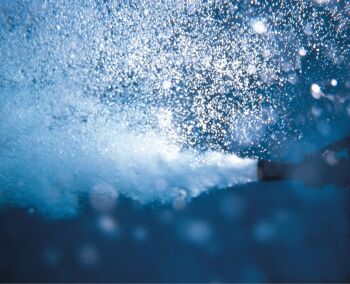
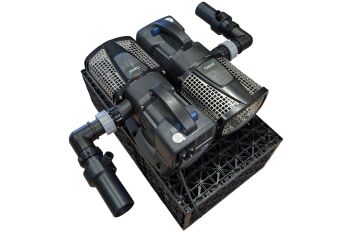
Injectors can be sited on the base of the lake floor and will ‘push’ water via a powerful submersible pump and through a special venturi nozzle, which will pull air from the surface and inject this into the jet of water. 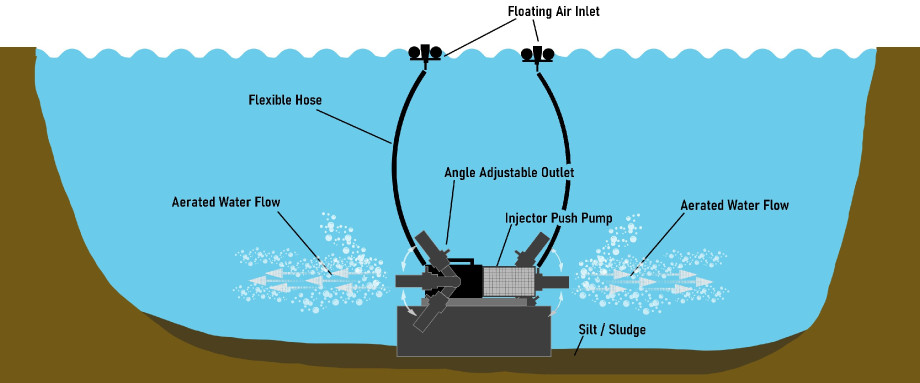
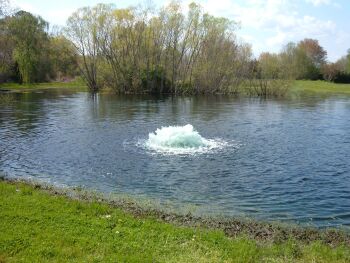
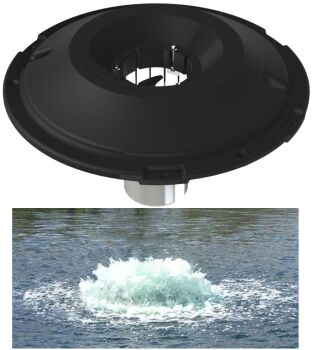
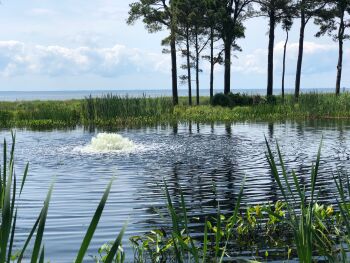
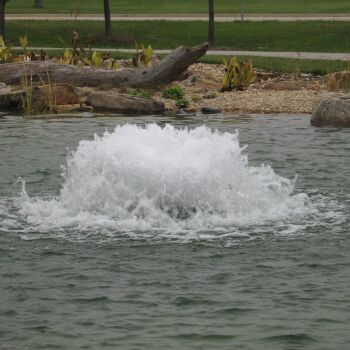
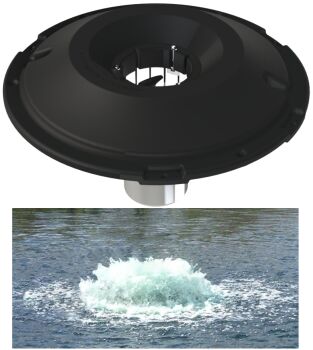
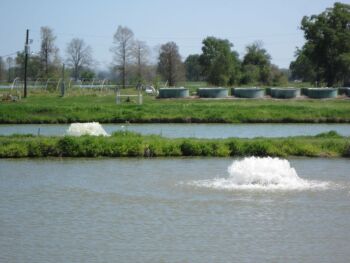
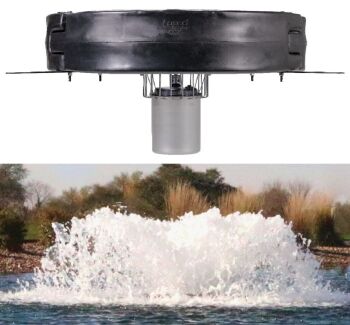
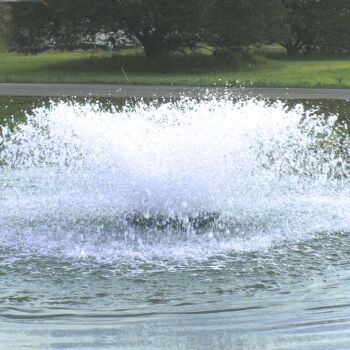
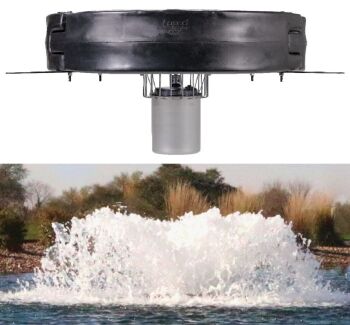
Floating aerators will create a mass of aerated water on the surface via a suspended pump which will help to infuse the water with oxygen, whilst creating gentle wave action across the lake and aiding circulation of the water mass.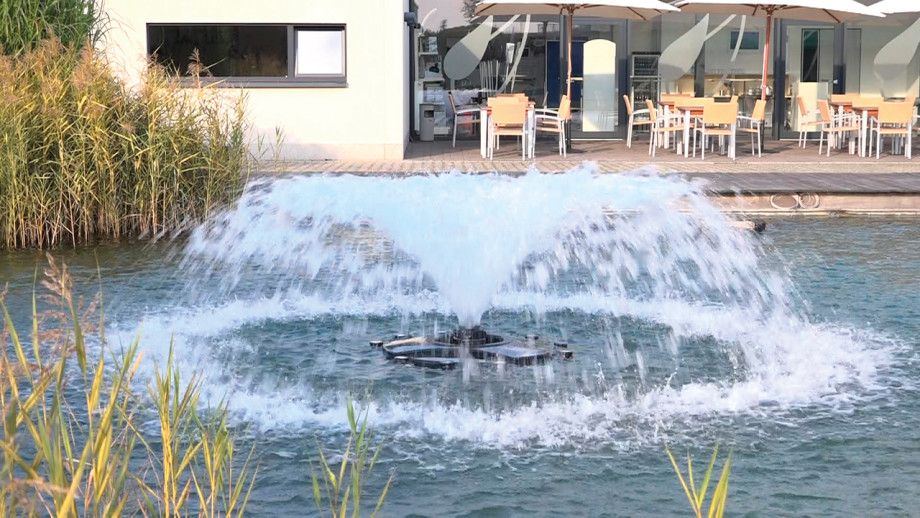
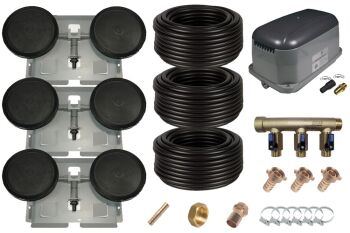
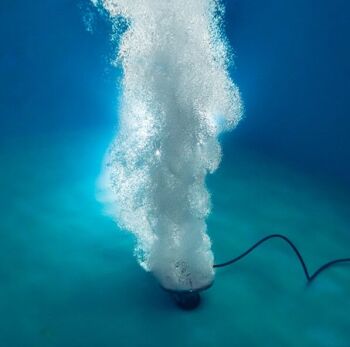
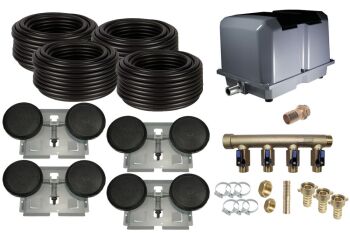
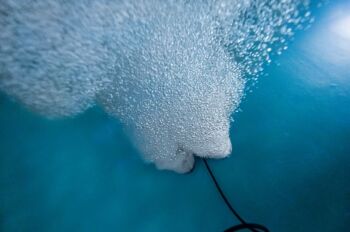
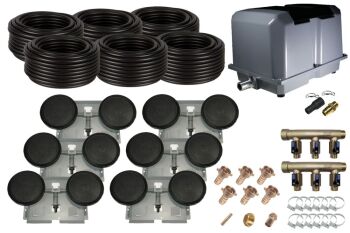
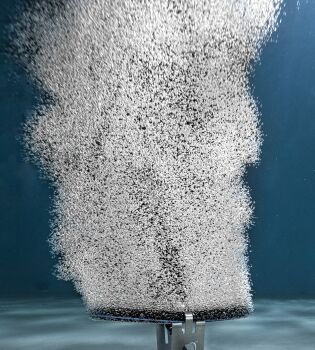
Medium depth ponds & lakes (1.5 to 3m) will open up the choices of aeration to include sub-surface systems, commonly named ‘diffused’ aeration. A land-based air compressor will force air down weighted hoses and into porous diffuser manifolds sited on the lake floor. The mass of microbubbles rise and spread slowly to the surface, adding oxygen and helping to circulate and de-stratify the water column from the bottom up.
Sub-surface Aeration Systems have several advantages. They tend to be more energy-efficient vs their coverage capability, in comparison to floating systems. As there are no mains electricity in the actual lake, these are well suited to lakes being used for swimming or leisure purposes. Diffused aeration becomes more efficient at oxygen transfer and circulation the deeper these are operated, within practical limits of the compressor.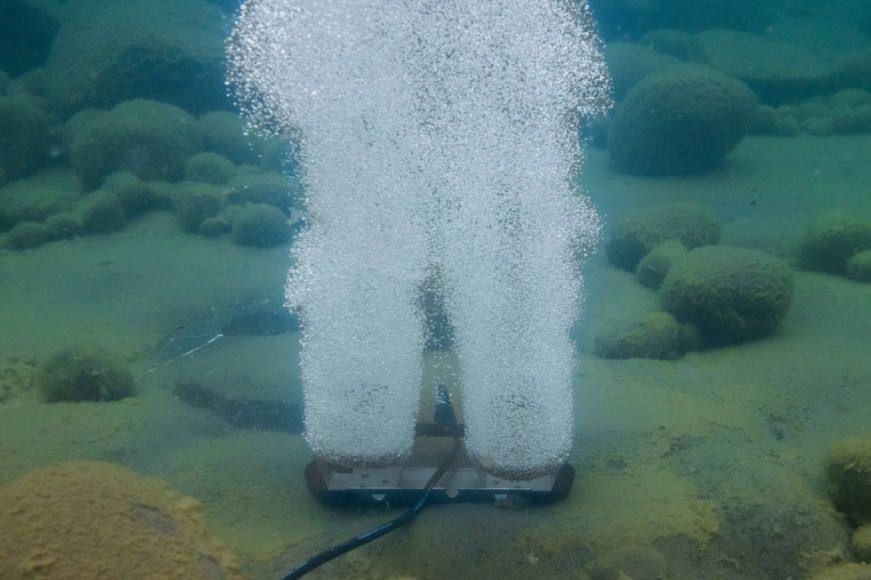
Deeper lakes (3m – 12m+) can be aerated by floating systems or larger diffused systems. Surface aeration of deep lakes is less advantageous as the aerators tend to only influence water to a depth of around 2-4 metres, so the lake floor and problematic sludge may not be affected. This can be overcome to some degree with the addition of powerful circulators aimed downwards, offering ‘bottom to top’ water movement.
Lake Size & Shape.
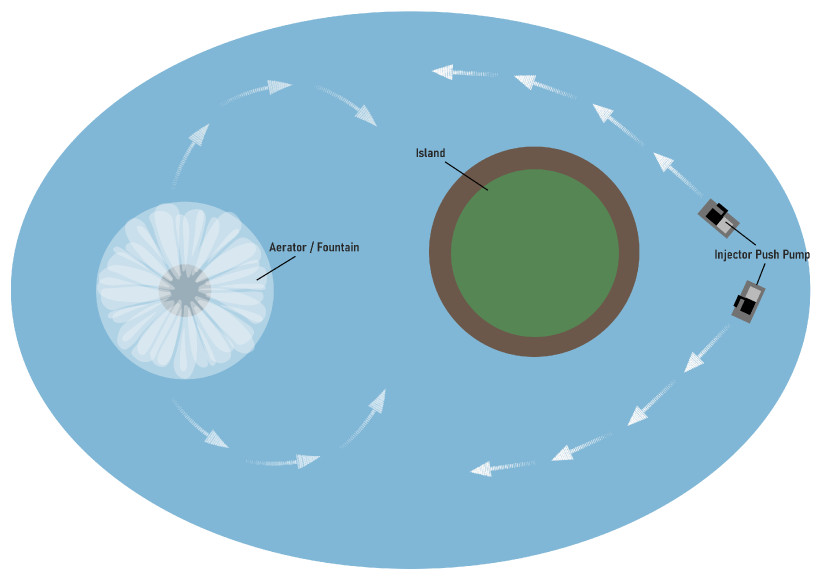
Lakes vary massively in shape and size so care should be applied when selecting the aeration systems. For example, a circular lake with no island or obstructions may simply require a single, centralised floating aerator to effectively circulate. However, lakes with islands or irregular shaped water bodies may require several strategically placed aerators or diffusers, alongside injectors to circulate and oxygenate the body of water most effectively.
Decorative or discreet aeration?
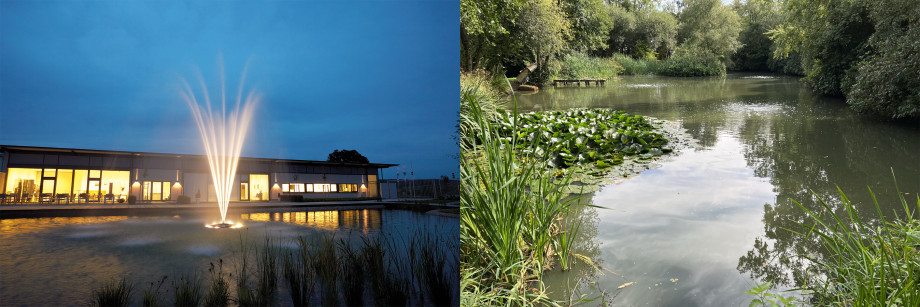
If you are searching for both aeration and a decorative water display, many of our Floating Aerating Fountains will provide a perfect mix of both. Whilst providing an impactful water display, the significant turnover of water delivered by the suspended pump will also help to circulate and oxygenate the water. If you prefer the lake surface to remain tranquil, sub-surface aeration or injector aerators are the more logical choice. Sub-surface Aeration Systems generally create very little in terms or surface disturbance, other than microbubbles bursting on the surface, producing little more than a ‘fizz’ from an acoustic perspective.
A note on water testing.
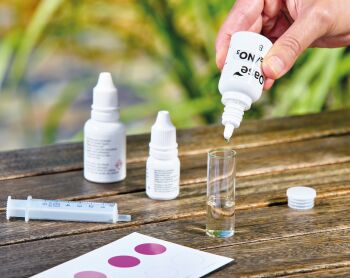
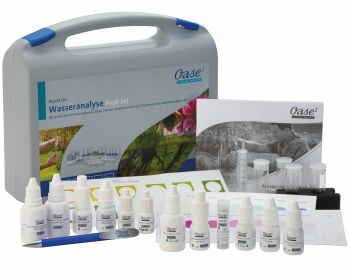
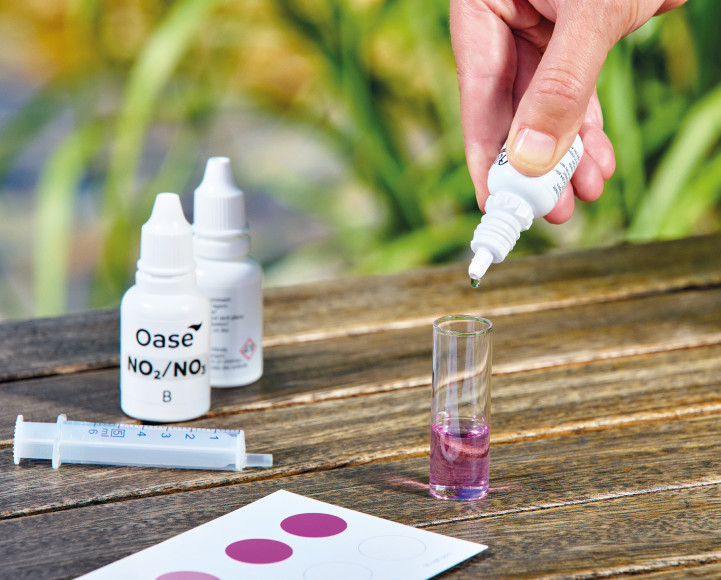
It is highly recommended to test the lake water parameters to determine what issues, if any, are currently in existence with regards to the water chemistry. Maintaining a record of the tests and logging the date and time is good practice, as is regular testing throughout the year to help monitor seasonal fluctuations. Testing should include pH, Carbonate Hardness, Ammonia, Nitrite and ideally Phosphates. Phosphate in lake water can be common, particularly if surrounded by chemically treated agricultural land which may be leaching into the lake. Present Phosphates can lead to excessive algal growth in many forms and also feed problematic duckweed.
There are a number of specific lake water treatments to tackle specific issues in addition to stabilising treatments but testing and logging results is key to knowing where you currently are and where the chemistry might be heading. Visit our Pond Water Parameters blog for more details on pond and lake water testing.
If you need advice on lake aeration, treatments or testing, call the team at Water Garden Ltd on 02392 373735 or email us at [email protected] for expert assistance.